
How to Choose the Best Private Spanish Tutor? 2026 Hong Kong Ultimate Guide
Want to learn Spanish but worried that in-store Spanish classes might not be right for you? Private Spanish tutoring might be the answer. If you're looking for efficient learning and a completely personalized pace, one-on-one tutoring is undoubtedly the fastest way to achieve your goals. Whether you're preparing for DELE or IB exams, or hoping to use your skills at work or while traveling, private tutoring can tailor the most effective learning plan for you.
The main points of this article
Why private tutoring is most effective : a completely personalized learning plan, flexible class times and locations, and the ability to precisely target learning pain points.
How to clarify learning goals : Analyze different learning strategies for academic exams (IB/DSE), workplace needs, or personal interests.
Face-to-face vs. online courses : Compare the interactivity and convenience of the two modes to help you choose the learning method that best suits you.
Three criteria for selecting a star teacher : teaching qualifications, teaching methods, and student reviews are the key factors in measuring teacher quality.
Tuition Fees and Value : When evaluating the "cost-effectiveness" of private tutoring, course packages and learning support beyond tuition fees are equally important.
Who is this article suitable for?
Students and parents : need to make targeted preparations for public examinations such as IGCSE, IB, and HKDSE.
For employed individuals : those who wish to enhance their competitiveness in the workplace or who need to communicate with Spanish-speaking countries for work purposes.
For those interested in learning : planning a trip to Spain or Latin America, or having a passion for Spanish culture.
Test takers : Prepare to take an internationally recognized Spanish language proficiency test such as DELE or SIELE.
Why is one-on-one tutoring the fastest way to learn Spanish?
In Hong Kong, a city where every second counts, time is the most precious asset. Whether you're a student preparing for a public exam or a working professional looking to enhance your skills, traditional small-group teaching may not always perfectly suit your unique needs. The core advantage of private Spanish tutoring lies in its unparalleled personalization and flexibility, precisely helping you achieve your goals.
A learning plan completely "tailor-made" for you
The most attractive aspect of private tutoring is that the course content can be designed 100% around your goals and weaknesses .
DSE/IB candidates: Teachers can focus their efforts on your weaker areas, such as speaking or writing, and provide intensive practice, instead of following the fixed pace of a large class.
For working professionals: Do you need to handle business emails or attend meetings with South American clients? Our instructors can design specialized business Spanish vocabulary and scenario dialogues for you. The content is easy to learn and apply immediately, making it very practical.
For those interested in learning: Simply want to travel to Spain? Then the course can focus entirely on practical scenarios such as travel conversations, ordering food in restaurants, and asking for directions, allowing you to get started quickly and have a more enjoyable trip.
To accommodate your busy schedule and time/location
Hong Kong life is fast-paced, and attending classes at fixed times can sometimes be a luxury. Private tutoring offers tremendous flexibility, allowing learning to integrate into your life rather than disrupting your existing rhythm. You can flexibly schedule your classes, such as during lunch breaks, weekend mornings, or even while traveling for work. The Hong Kong Spanish Cultural Association has centers in Tsim Sha Tsui and Causeway Bay, making it convenient for you to receive in-person instruction in the city, or of course, to comfortably learn online from the comfort of your home.
Precisely target your learning "pain points"
In a small group class, you might be afraid to ask questions for fear of embarrassment, or the teacher might not be able to immediately detect your pronunciation blind spots.
Private tutoring is like having a personal coach for your Spanish learning. Every pronunciation mistake and every grammatical confusion is immediately detected and corrected, preventing bad habits from taking hold. This immediate feedback is key to accelerating language acquisition.
For example, many Hong Kong students confuse the usage of "ser" and "estar". An experienced native language teacher can help you thoroughly understand the subtle contextual differences between the two through extensive one-on-one sentence-building exercises. This kind of in-depth interaction and practice is difficult to provide in traditional large-class classrooms. To learn more about effective learning methods, consider our adult Spanish course .
Intensive opportunities for oral practice
Ultimately, learning a language is about communication. In a one-on-one class, you have 100% of the time to speak directly with a native speaker, which is the fastest way to improve your spoken fluency. Think about it: compared to a group of six where you might only have a few minutes to speak each lesson, the amount of speaking practice in private tutoring is exponentially greater. Continuous, high-intensity practice quickly builds your confidence, allowing you to speak Spanish confidently in real-world situations, which is especially important for candidates preparing for the DELE exam 's speaking section.
Want to learn Spanish well? Ask yourself these questions first.
The most important step before deciding to seek private Spanish tutoring is to stop and ask yourself: "What do I want to study for?"
This question sounds so simple, but the answer will definitely affect your entire subsequent learning trajectory. Having a clear goal is like having a map. You and your instructor can plan the most efficient route together to ensure that your time and money are well spent. If the goal is vague, it is easy to get lost in the middle of learning, and end up getting half the result with twice the effort.
Want to effectively plan your learning blueprint? You might as well evaluate your real needs from the following three general directions.
Goal-oriented: Fighting for academic exams
The educational environment in Hong Kong is highly competitive. Whether it is local HKDSE or international courses such as IGCSE or IB Spanish, Spanish can be your secret weapon to stand out. If exams are your primary goal, think a little deeper:
What is the target score system? Do you want to get A* in IGCSE, or do you want to challenge the 7-point perfect score in IB HL? Different goals require completely different preparation efforts.
Which aspect is your weakness? Is it because of writing (escrito) that I can’t express myself all the time, or because of speaking (oral) when I’m nervous, I can’t speak out? To identify the pain points, you can first focus on attacking them.
How much time do you have to prepare? How many months are left until the exam is finalized after a year and a half? What you need is a long-term solid foundation, or a short-term pre-exam sprint class?
Private tutoring for exams will focus very much on test-taking skills, analyzing past papers, and strengthening the vocabulary and grammar within the exam scope. Our course consultants will match you with native-speaking tutors who are familiar with the relevant IB Spanish examination system and tailor the most efficient preparation strategy for you.
Workplace needs: Paving the way for career growth
In today's globalized business world, knowing another language, especially Spanish, which is spoken by more than 500 million people around the world, is definitely a powerful career advantage. If work demands are your source of motivation, ask yourself:
In what scenarios will it actually be used? What situation do you need to deal with most in Spanish? Are you writing professional business emails, participating in video conferences, or receiving customers from Spain or Latin America in person?
Are there any industry terms to learn? Is there any specific professional vocabulary in your industry (such as finance, purchasing, fashion) that you must know before you can communicate with others?
What level do you want to reach? Your goal is to chat briefly with foreign colleagues, or do you want to be able to be alone and complete business negotiations by yourself?
Workplace-oriented tutoring will be very pragmatic, and the course content will be designed around your work situation to ensure that you can apply it immediately after learning, and you will have the opportunity to practice it the next day after you return to work.
At the Hong Kong Spanish Cultural Association, we have come into contact with many professionals, such as lawyers and engineers. Our native-speaking teachers will specially collect real documents and cases from related industries, so that students can practice directly in the classroom, ensuring that the knowledge learned can be seamlessly connected with practical work.
Personal interests: Exploring more possibilities in life
Maybe you have no exam pressure or work needs, and are simply deeply attracted by the passionate and unrestrained culture of Spain or Latin America. You might wish you could order a Sangría in fluent Spanish next time you travel, or watch an Almodóvar movie without subtitles.
Which country's culture are you most interested in? Is it Spanish Flamenco, or Mexico’s Day of the Dead?
What conversation is most needed when traveling? Want to learn how to ask for directions, order food at a restaurant, or bargain at the market?
Want to set a small goal for yourself? For example, do you want to reach the A2 level of the Common European Framework of Reference for Languages (CEFR) within six months and be able to handle basic daily communication?
Interest-led learning can be so relaxing and fun. Tutors will incorporate more cultural elements into the class, such as music, movies and food, making the learning process itself a pleasure.
No matter what your starting point is, spending a little time thinking about your goals is the first step to success. The decision-making flow chart below can help you quickly determine which side learning model is best for you.
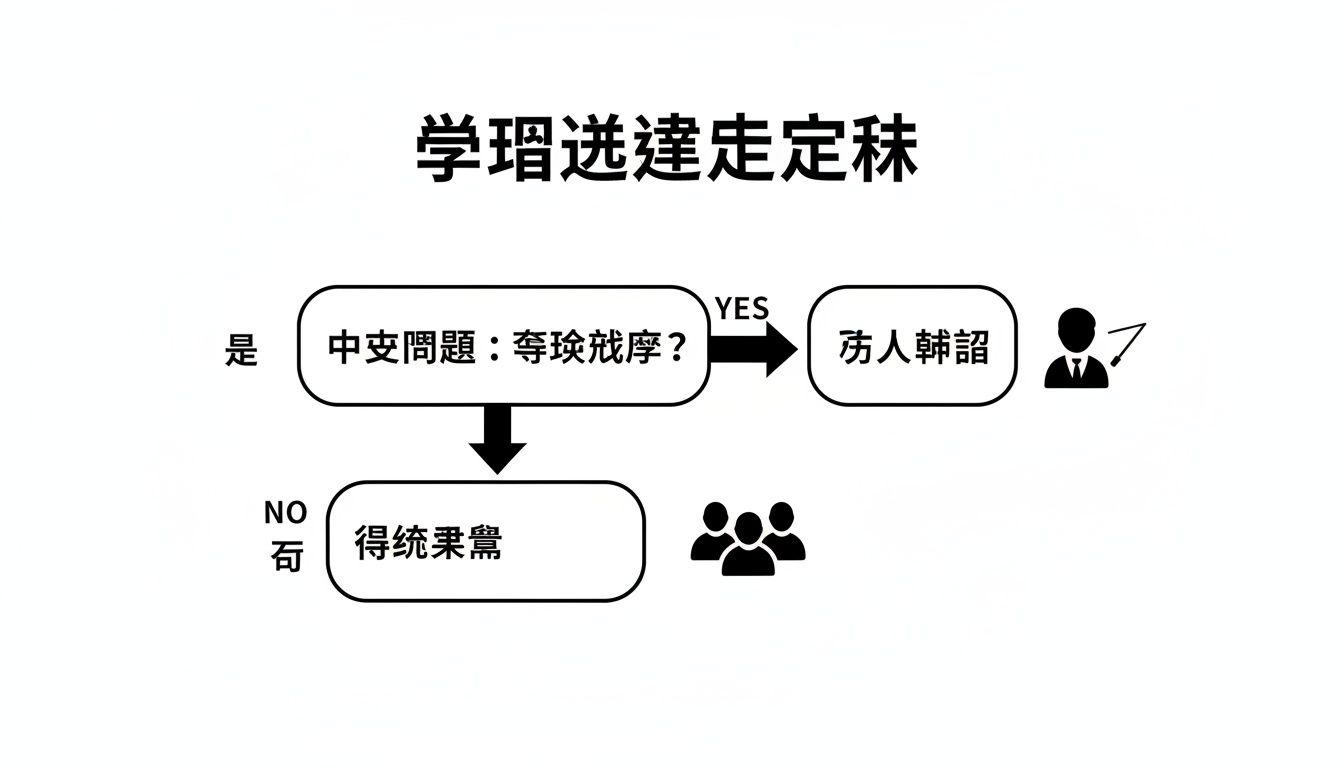
It can be clearly seen from the picture that if you are pursuing efficiency and a personalized learning experience, private tutoring is undoubtedly the most direct choice.
In order to help you see more clearly how different goals correspond to different learning plans, we have prepared the comparison table below.
Comparison of private tutoring plans for different learning goals
This table can help you quickly understand the characteristics, recommended hours and budget considerations of different tutoring programs based on your specific needs (such as academic examinations, career development, personal interests), so that you can have more direction when making decisions.
Learning objectives | Course Highlights | Recommended learning mode | Expected time to achieve the target |
|---|---|---|---|
Academic examinations (IB/IGCSE/DSE) | Test-taking skills, analysis of past exam questions, improvement of speaking and writing skills, and specific grammar drills. | Intensive one-on-one training, focusing on key weaknesses. | 3-9 months (depending on existing baseline and target score) |
Career Development (Business Communication/Industry Terminology) | Industry-related terminology, email writing, meeting and negotiation terminology, business etiquette. | Regular one-on-one or small group teaching , focusing on scenario simulation. | 6-12 months (to achieve basic business communication skills) |
Personal interests (travel/culture/daily communication) | Practical travel conversation, integration of cultural knowledge, everyday themes, pronunciation and language sense development. | Flexible one-on-one or interest group sessions , relaxed atmosphere. | Continuing learning (depending on individual progress and interests) |
Obtain DELE/SIELE certificates | Comprehensive training and mock exams covering all four sections of the exam (listening, speaking, reading, and writing). | One-on-one or specialized preparation classes , intensive training | 4-6 months (depending on the specific level) |
I hope this form can help you! Remember, the most expensive or fastest plan is not necessarily the best. The most important thing is to find a plan that best suits your personal goals and learning pace.
Face-to-face teaching online? Choose your Spanish private tutoring model
Technology is developing rapidly, and learning models are evolving with it. Online tutoring has become a daily routine for many Hong Kong people. But, between traditional face-to-face classes and emerging online courses, which Spanish private tutoring model is best for you first? This is not only a choice of location, but also directly affects your learning experience and results.

In fact, both modes have their own advantages. There is no guarantee that one will be better. The most important thing is to look at your personal needs, learning style and pace of life. How about we conduct an in-depth analysis from several core angles to help you make the wisest decision.
Interactivity and learning atmosphere: face-to-face warmth
The greatest charm of face-to-face courses is the irreplaceable real-time interaction and intimacy . In the physical classroom, the teacher can see your brows, eyes, forehead, and body language at a glance, and immediately know whether you are smart or not. This kind of face-to-face communication can easily establish a relationship between teachers and friends. Especially for children or teenagers who need more concentration and guidance, the effect is usually better.
If you are preparing for the oral exam, the pressure of face-to-face classes that simulates the real exam is definitely a big advantage. The teacher can role-play with you on the spot and correct your pronunciation and mouth shape by hand. This sense of presence is difficult to completely replicate in online courses.
Of course, online courses are not interactive. Through tools such as interactive whiteboards and real-time voting, you can also create a good sense of participation. And the biggest advantage is that you can have access to excellent native language tutors from all over the world, and the choice is no longer limited to Hong Kong.
Time flexibility and convenience: the absolute advantages of online courses
When it comes to convenience, online courses definitely win. You no longer need to waste precious time in transportation. As long as you have a computer or tablet, you can go to class at any time no matter where you are in the office. This is definitely the best solution for workers with busy schedules and irregular schedules, or for students who live in relatively remote areas.
Online courses : extremely convenient, saving a lot of travel expenses and time, and you can even record the class for review anytime.
Face-to-face courses : Provide a fixed learning environment to help establish regular study habits and reduce various distractions at home.
Our Spanish Cultural Association of Hong Kong understands that everyone has different needs, so we have set up centers in Tsim Sha Tsui and Causeway Bay with convenient transportation to provide a high-quality learning environment for students who prefer face-to-face teaching experience. At the same time, we also provide mature online courses for students all over Hong Kong. You can choose flexibly according to your own situation.
So how do you choose the one who comes first and who is the best?
To put it simply, you can choose the right one according to your own situation:
Face-to-face classes are for you if you... need stronger discipline, enjoy the interactive atmosphere of the class, want the teacher to observe and correct pronunciation in real time, or are easily distracted at home.
Online courses are for you, if you... have a full schedule, live far from the city, have strong self-discipline, and want to use the after-class recording function to review over and over again.
Want to learn more about the pros and cons of online learning? You can check out our other detailed analysis article on the pros and cons of online learning .
In fact, there is no absolute good or bad distinction between face-to-face and online teaching. The best way is always to experience it yourself. Many institutions provide free trial classes. You might as well try out different teaching styles, and you will know which method can best help you achieve your learning goals.
Choosing the right tutor? Three criteria for finding a professional private Spanish tutor.
If you want to learn Spanish well, choosing a good teacher is definitely half the battle. But is he a "good" teacher in the first place? Is it enough to be a Native Spanish Teacher? In fact, it is far from enough. If you really want to find a Spanish private tutor who is professional and suitable for you, there are three key points that you must understand.

1. Teaching qualifications and experience: not only knowing how to teach, but also knowing how to teach
First of all, professional qualifications are the basic admission ticket. An excellent tutor not only needs to know how to speak Spanish, but the most important thing is to know how to "teach".
Educational background: Pay attention to whether the tutor holds a university degree related to education or linguistics. This kind of professional training means that they have a deeper understanding of language structure and teaching theory, and they cannot teach based on feeling alone.
Professional certification: If the tutor has DELE examiner qualification, or other recognized Spanish teaching certificate as a foreign language (such as ELE), it is absolutely a guarantee of confidence.
Practical experience: especially those who have never taught Hong Kong students. Tutors who are familiar with the local academic system (such as IGCSE, IB, HKDSE) can better understand your learning difficulties and examination needs, and their teaching methods will naturally be more relevant.
According to guidelines from the official examination body, the Cervantes Institute, effective language teaching must be based on a systematic approach and an understanding of the learner's background. A professional tutor can apply this theory to the specific needs of Hong Kong students.
2. Teaching methods and concepts: Learning should be fun and interactive
Secondly, teaching methods directly affect your learning experience and effectiveness. A good instructor will never just ask you to read along with this book.
You should focus on observing the teacher's teaching style during the trial class. Does he use a "Communicative Approach" to encourage you to speak more and use more, instead of just memorizing grammar rules? Is the classroom atmosphere relaxed and interactive enough so that you are not afraid of making mistakes and are brave enough to speak?
A truly good teacher will use many real-life examples, role plays, and even mini-games to make learning lively and interesting, rather than boring one-way indoctrination. We insist on hiring more than 30 full-time native language teachers to ensure that the teaching styles are diverse enough to match you with the best learning partners. You can learn more about the professional background of our teaching team .
3. Real success stories and word-of-mouth: students’ evaluations are the most practical
Finally, looking back at the actual teaching results, these are the most convincing proofs. You should take the initiative to check out reviews and word-of-mouth reviews from past students.
Instead of just looking at the selected reviews on the website, you can go to Google Maps, Facebook page or discussion forum to see more authentic student sharings. What is their learning progress like? Is the tutor patient and responsible? This kind of real feedback is more credible than any propaganda slogan.
A professional language center is usually happy to share students' success stories, such as exam passing rates, students' works, etc. These are important references for evaluating the quality of tutors.
Is a points-based tuition plan the most cost-effective? How to assess the true value of private tutoring?
Finally, we arrived at the last step: weighing the tuition fees and making a final decision.
Many people choose private Spanish tutoring and only focus on the price per hour, but this idea is actually a bit short-sighted. The really smart thing to do is to look at tuition fees, course packages, and the learning results you expect to achieve together.
The private tutoring market in Hong Kong offers a wide range of prices. These range from a few hundred dollars per hour for a freelance tutor to a comprehensive course offered by a professional language center. The real question you need to consider is: for that price, are you just buying class time, or a complete learning system to help you learn better?
Don’t just look at the price, look at the “value”
A comprehensive private tutoring program, in addition to face-to-face instruction from a professional tutor, should include some important "value-added services." These packages are often the key difference between a personal tutor and a professional language center, and are also the true guarantee of your learning effectiveness.
Systematic teaching materials: Will the school provide a coherent set of teaching materials that goes from easy to deep? Or do you just randomly find some practice pieces on the Internet and piece them together?
Progress tracking: Are there regular progress reports or evaluations so that you know clearly what you have learned and what you need to improve on?
Additional learning resources: In addition to the content taught in the classroom, are there any additional online exercises, vocabulary libraries or cultural databases that you can review at any time to add value?
Dedicated follow-up: When you have questions about course progress or learning direction, in addition to the teachers in class, are there any course consultants who can provide professional advice and support?
These seemingly small supporting facilities will actually greatly improve your learning efficiency and ensure that every tuition fee you spend is well spent.
Think of private tutoring as a "long-term investment." Choosing an institution with transparent fees and complete facilities can help you save a lot of money and allow you to concentrate on your studies. In the long run, it will be more "fun".
For more detailed analysis on private tutoring prices in Hong Kong , you can refer to the ultimate guide we wrote.
Use all the free testing sessions to make the final judgment.
Almost all professional language centers offer "free trial classes" or level assessments, which is the most important step before making your final decision. During the trial class, in addition to experiencing the teacher's teaching style, you should also actively understand the details of how the course works.
List of questions to ask during the exam:
Source of teaching materials: What teaching materials will be used in the course? Will they be compiled by the center itself, or will they be authoritative teaching materials recommended by Instituto Cervantes?
Progress Assessment: How will the school assess my learning progress? How soon will there be a formal evaluation?
Arrangements for taking leave to make up a class: If I need to take a leave for something, what is the policy for making up a class? Will there be any additional charges?
Student support: If you encounter problems after class, how can you contact the teacher or school for help?
At the Hong Kong Spanish Cultural Association, we offer a transparent pricing structure and a comprehensive student support system, from free level assessments to dedicated course consultant follow-ups, ensuring your entire learning journey is clear and secure.
Frequently Asked Questions (FAQ)
1. I have zero basic knowledge, will it be awkward to meet one-on-one?
Absolutely not! To be honest, private tutoring is for students with the most basic knowledge. Many times in large classes, the teacher has to take care of so many people, and the progress is relatively fast. It is difficult for beginners to keep up, and they even dare not ask questions. One-to-one teaching is different. The teacher can focus 100% on you. From the most basic letters, pronunciations, and even how to pronounce the R sound, you can slowly teach and practice repeatedly to ensure that your foundation is solid enough.
2. How many classes should I attend per week to learn effectively?
There is no standard answer to this question, it depends on your goals and how much time you can devote. If you are going to take the DELE exam in a few months, it is recommended to take at least two classes a week to maintain your study intensity. If you are just interested, one class per week is enough. The most important thing is to persevere. The effect of regular study is far better than that of "chicken essence class".
3. Are private tutoring sessions always expensive?
If you look at the hourly tuition alone, the unit price of one-to-one tutoring is indeed higher than that of group classes. However, we might as well change the angle and calculate the "time cost" and "learning efficiency". Because private tutoring is highly targeted, the total time required to achieve the same learning goal (for example, from zero to A2) may be shorter than that of group classes, and the "cost-effectiveness" may be higher.
4. If you think a teacher is not good enough for me, what do you think?
Of course it can be replaced. This is also a great guarantee for choosing a professional language center instead of finding a freelance tutor yourself. At the Hong Kong Spanish Cultural Association, we will try our best to match you with the best teacher. If you feel that the style is not suitable after attending class, you can report it to our course consultant at any time, and we will arrange another teacher for you as soon as possible to ensure that your learning progress will not be affected.
5. My son/daughter is 5 years old, is it too early to learn at home?
Not a single thing! Generally speaking, the age of 4 to 6 is the golden period for learning a second language. Children at this age are like sponges, and their ability to imitate sounds and intonations is particularly strong. Our Spanish courses for children allow them to absorb Spanish unconsciously through games, singing and other relaxed methods.
6. I live quite far away, do I have to go to Tsim Sha Tsui or Causeway Bay for classes?
Not necessary at all! In addition to providing face-to-face classes at our teaching centers in ** Tsim Sha Tsui ** and Causeway Bay, our online private tutoring courses are very mature. You can sit at home or even during office lunch time and have one-on-one interactive learning with our professional native tutors through Zoom, making your schedule more flexible.
Are you ready to find a professional coach for your Spanish learning journey?
Contact the Hong Kong Spanish Cultural Association via WhatsApp now to schedule a free professional assessment. Let us match you with the most suitable native language teacher and help you take your first step towards fluent Spanish!