
Is Spanish difficult to learn? A Hong Kong perspective provides a comprehensive analysis and practical learning blueprint.

Before many Hong Kong people learn a new language, the first question is usually: "Is Spanish difficult to learn?" The answer is straightforward: for native Cantonese speakers, Spanish is relatively easy to get started with, especially the pronunciation, but to master it, grammar (especially verb conjugation) requires hard work. Overall, Spanish is considered one of the easiest European languages for Hong Kong people to learn.
Want to experience how easy it is to get started? ➡️Click here to reserve a free trial class via WhatsApp now , and our native teachers will show you how to get started.
The author of this article
This article was written by the team of the Hong Kong Spanish Cultural Association . We have over 30 native Spanish language teachers from Spain and South America, providing professional Spanish language courses in Hong Kong. With years of experience teaching Hong Kong students, we have a deep understanding of the spezifische challenges local learners face in pronunciation, grammar, and exams, aiming to provide the most practical and localized learning advice.
Who is this article suitable for?
Adult beginners : those who want to learn multiple foreign languages to enhance their skills, or those planning to travel to Spain or South America.
Secondary school students and parents are considering selecting Spanish as an elective subject in the IB/ICGSE/HKDSE.
For working professionals : those who need to use Spanish for work or who want to increase their competitiveness in the workplace.
For test takers : Prepare for internationally recognized Spanish language proficiency tests such as DELE.
Key Summary
Pronunciation advantage : Cantonese native speakers have flexible oral muscles and have an advantage over other foreigners in learning Spanish pronunciation (except for the retroflex sound R).
The biggest challenge : Grammar is the biggest hurdle, especially verb conjugation and the masculine and feminine forms of nouns, which require systematic learning.
Study time : If the goal is to achieve travel communication (A1 level), it will take about 80-100 hours; if the goal is to prepare for public exams (B1/B2 level), it will take 2-3 years of continuous study.
Cost-effectiveness : Small class teaching is highly interactive, and the learning efficiency is far higher than that of large classes or self-study, making it more cost-effective in the long run.
Learning rewards : Whether it's for further education (achieving high scores in IB/DSE) or career advancement (increasing workplace competitiveness), learning Spanish offers a clear advantage.
Setting realistic expectations: Quickly comparing three languages
"Is Spanish difficult to learn?" This question largely depends on how you compare it. If you are good at English, you already have a lot of advantages in vocabulary; if your native language is Cantonese, you may feel more comfortable learning a new pronunciation system.
To give you a more realistic idea, we have created a simple comparison table, specifically from the perspective of Hong Kong learners, to analyze the difficulty of learning Spanish, English and Chinese (Cantonese) in several core areas.
Of course, this comparison is not absolute. It is mainly to give beginners an overview so that you can roughly know what challenges and advantages you will face. Everyone has different learning backgrounds and language talents, so their actual experiences will naturally vary.
Quickly compare the learning difficulty of Spanish, English, and Chinese.
Understanding these differences can help you set a reasonable goal before starting to learn. For example, you can expect that you will quickly build confidence in your pronunciation, and you can also expect to spend some time in the early stages to understand and practice grammar rules.
Language characteristics | Spanish difficulty | English difficulty level | Chinese (Cantonese) Difficulty Level |
|---|---|---|---|
Pronunciation Mastery | Easier : letter sounds are fixed, rules are straightforward, and there are few exceptions. Once you master the rules, you will be able to "read the words". | Medium : The pronunciation of letters is not fixed. You need to learn phonetic symbols and a large number of pronunciation rules and exceptions. Many times you have to rely on rote memorization. | Difficulty : There are nine tones and six tones, and the tonal changes are extremely complex. It is definitely a challenge for non-native speakers. |
Grammar system | Difficulties : The conjugation of verbs is extremely complex (changes according to person and tense), and nouns are divided into yin and yang. | Medium : Verb conjugation is relatively simple, but tense, voice and preposition usage are quite complex and easy to confuse. | Easier : There are no verb conjugations, noun genders or singular and plural forms, and the grammatical structure is relatively straightforward, mainly relying on word order. |
Vocabulary memorization | Medium : It shares a lot of Latin etymology with English. It will be easy for people with English knowledge to learn, but be careful of "false friends". | Medium : The vocabulary is extremely large and comes from a wide range of sources (Germanic, Latin, French, etc.), and there are many words to remember. | Difficulties : The Chinese character system is extensive and profound, requiring a lot of memory, and the correlation between glyphs and pronunciation is relatively low. |
After reading the list, it should be clear that the biggest difficulty in Spanish is grammar. This also explains why it is so important to study with a professional tutor.
At the Hong Kong Hispanic Cultural Association , our native-speaking teachers from Spain and South America will use systematic small-class teaching (maximum 6 people) to break down complex grammatical concepts into easy-to-understand knowledge points, and then practice them repeatedly in interactions to ensure that you do not memorize by rote, but truly understand and use them.
Okay, now that we understand the macro question of "Is Spanish difficult to learn?", the next step is to implement it. Let's take a look at the mountains to conquer on the actual learning road. For Hong Kong people whose mother tongue is Cantonese, there are four main difficulties in learning Spanish: pronunciation, grammar, vocabulary, and the most elusive "language sense."
Although the Spanish pronunciation system is famously straightforward, the devil is often in the details. There are some specific pronunciations that are always a challenge for us. And its complex grammatical system is a link that every learner must put a lot of effort into overcoming.
The picture below simply and directly shows the challenges that Hong Kong learners generally encounter in the three major areas of pronunciation, grammar, and vocabulary.
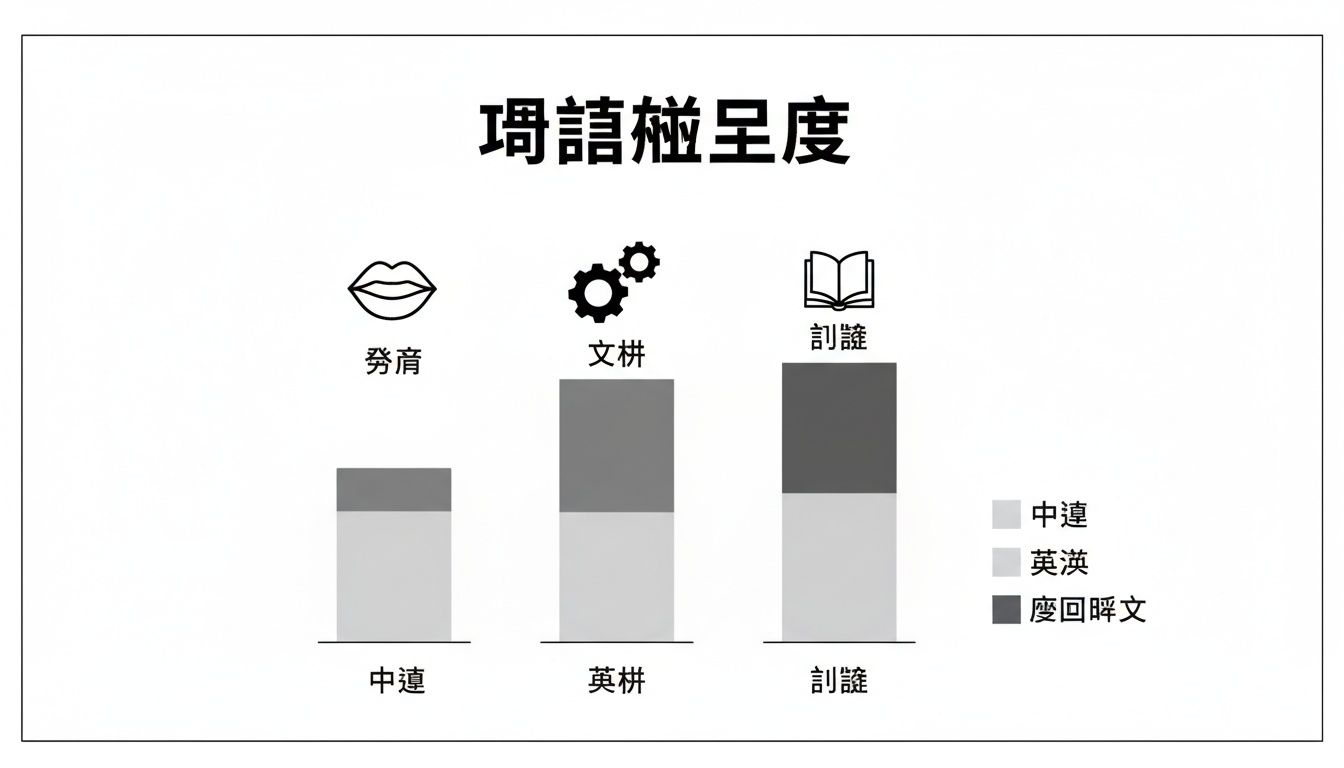
As you can see from the picture, grammar is definitely the core challenge in learning Spanish. Although pronunciation and vocabulary are relatively easy, they each have unique difficulties that need to be overcome one by one.
Challenge 1: The subtleties of pronunciation
The pronunciations of most Spanish letters are very fixed, and learning the rules basically means you can read them, which is much friendlier than English. However, there are a few sounds that are "old friends" of Hong Kong students, especially the feared retroflex sound R (erre) .
Single deafening consonant (r) : For example, the r in pero (but), when pronouncing it, the tip of the tongue only needs to flick it lightly.
Multiple trills (rr) : like perro (dog) or the prefix rosa (rose), the tip of the tongue vibrates rapidly and continuously like a pile driver. This action requires specific oral muscle control. Many Hong Kong students will find it difficult to follow the instructions at first, and even become discouraged after practicing.
Our native language teachers often suggest to students that practicing retroflexion can be regarded as "oral gymnastics". Take a few minutes a day and try to imitate the sound of an engine starting, or use the syllables "de-re, de-re, de-re" to train the flexibility of the tip of your tongue, and you will slowly get the hang of it.
Challenge 2: Grammar as complex as a maze
Grammar is undoubtedly the most difficult part of learning Spanish, and it is also the culprit that many people find "difficult to learn". Its logic is very different from the Chinese and English we are familiar with.
1. The large number of verb conjugations (Conjugación) is the core difficulty in the core. The same verb will change according to different persons (I, you, him...), tense (present, past, future...) and mood (statement, command, subjunctive...). A verb "Xianxian" can have more than 50 conjugations. It takes a lot of practice to memorize it in the brain and turn it into a natural reaction.
2. Género (Género) of nouns. In Spanish, all nouns have genders, one is masculine (masculino) and the other is feminine (femenino). For example, "书" ( libro ) is a boy, and "台" ( mesa ) is a girl. More importantly, all adjectives and articles must change accordingly with the gender and singular and plural of the noun, like a chameleon.
3. Confusion about Ser vs. Estar The English sentence "to be" (to be) means to do something, but in Spanish it needs to be treated separately with two verbs: ser and estar . Their usage is completely different:
Ser : Used to talk about some permanent and essential characteristics. For example: Yo soy de Hong Kong. (I am from Hong Kong.)
Estar : Used to describe a temporary state or location. For example: Yo estoy en Tsim Sha Tsui. (My home is in Tsim Sha Tsui.)
Beginners use these two words indiscriminately all the time, but in order to establish the correct sense of emotion, this level must be passed and must be mastered through a large number of situational exercises.
Challenge 3: “False Friends” in Vocabulary
For Hong Kong people with a background in English, many Spanish words are very familiar because they are all derived from Latin. For example, información (information) is almost the same as possible (possible). This is an advantage in the early stages, but it also has its own traps.
These words are the so-called "false friends" (falsos amigos). They are spelled similarly but have completely different meanings.
Embarazada : It looks like "embarrassed" in English, but it actually means " big belly ."
Éxito : Looks like "exit" (exit), but it actually means " success ".
Sopa : It looks like "soap", but the actual meaning is " soup ".
Memorizing these vocabulary words incorrectly can cause a joke at any time, so you must be extra alert when studying and don't take anything for granted.
Challenge 4: Develop a natural sense of emotion
Finally, even if you work on pronunciation, grammar and vocabulary, you still need to develop a "sense of language" in order to speak authentically and naturally. It's quite abstract and includes understanding accent differences in different regions (e.g. Spanish vs. Latin America), recognizing slang terms, and the tone of voice to use in a conversation.
For example, Spanish people speak quickly and passionately, which takes time to adapt to and imitate. Language sense cannot be learned through books alone. It must be developed slowly through a large number of immersive experiences, such as communicating with native speakers, watching movies, and listening to songs.
In the adult courses of the Hong Kong Hispanic Cultural Association, we insist on small class teaching , which is to ensure that each student has sufficient opportunities to interact with native teachers. This is the best environment for cultivating real language and emotion. Our systematic course design will help you overcome the above four challenges one by one, so that you can have a confident answer to the question "Is Spanish difficult to learn?"
How much time should be spent on different learning goals? How is the difficulty level measured?
"Is it difficult to learn Spanish?" This question is like asking someone, "Is hiking difficult?" There is no standard answer. Hiking Dragon's Back and climbing Lion Rock are completely different in terms of difficulty and equipment. In the same way, teaching a five-year-old toddler to sing Spanish nursery rhymes is very different in strategy and effort than helping a middle school student prepare for the IB Spanish B HL exam.
Therefore, the most important first step is to figure out what you are studying for. Your life stage and actual needs will determine which language you should focus on, and they will also directly affect the length of study time. Below we focus on the most common types of learners in Hong Kong, breaking down the challenges they will encounter and how much time they are expected to spend.
Children and Parents: Build language sense through play
For young children or primary school students, the goal of learning Spanish is not to memorize complex grammar, but to cultivate interest and build a sense of language . At this stage, "fun" is far more important than "doesn't work".
Learning difficulties : The biggest challenge is how to continue to attract children's attention in a non-Spanish environment. The traditional classroom model of "teacher talks and students listen" is absolutely not working. Language must be integrated into games, singing and stories.
Time estimate : The goal is to make children feel Spanish is friendly and to learn simple words such as greetings, colors, and animals. As long as you continue to contact them for 1-2 hours a week, through fun activities, in about half a year to a year, you will see children who are bold enough to speak and happily imitate the teacher's pronunciation.
Strategic advice : Be sure to use gamification. For example, use card games to memorize new words, sing Spanish children's songs to learn pronunciation, and play role-playing games with simple instructions. The role of parents is to accompany and encourage, but Qian Qi has become an examiner.
At the Hispanic Cultural Association of Hong Kong, our children's courses are designed around this concept. Experienced native-speaking teachers will use a large number of interactive games, music and art activities to create a fun and immersive environment, so that children will fall in love with Spanish before they know it.
Secondary school students: Preparing for public examinations (IGCSE / IB / HKDSE)
Once I reach middle school, my learning goals become very clear: to get good grades in public examinations . Whether it is IGCSE, IB or HKDSE, students are required to have a systematic mastery of Spanish, especially reading, writing and grammatical accuracy.
Difficulties in learning : The exam-oriented learning pressure is not strict. Vocabulary, grammatical structure, reading comprehension and writing skills must be taken into consideration at the same time. Students not only need to know and use the words, but also understand the culture behind them and use them accurately. Especially the use of verb conjugation (conjugation) and simultaneous tenses (tenses). These are the traps where most people lose points.
Time estimate : If you want to get the ideal score in the exam (such as 6-7 points in IB Spanish B SL or Level 4-5 in HKDSE), you usually need at least 2-3 years of continuous study, investing 3-4 hours per week, and additional practice before the exam.
Strategic suggestion : Be sure to follow a systematic course to lay a solid foundation in grammar. At the same time, you need to do a lot of practice based on the exam pattern, including working on past papers, analyzing oral exam coping strategies, and laying out knowledge to build a writing framework.
Many people worry that it will be difficult to get high marks if they choose Spanish as an elective subject, but the reality may be exactly the opposite. According to the 2023 report of the Hong Kong Examinations and Assessment Authority, as many as 78.9% of candidates in the HKDSE Spanish subject passed Level 3 or above. This rate is far higher than many core subjects. This data tells us that as long as we are well prepared, achieving high scores is definitely not a fantasy. If you want to see some official data clearly, you can browse the detailed report of the Hong Kong Examinations and Assessment Authority .
Adult Interest Class: Practical Conversation Skills, Quick Start
For most adults, the original intention of learning Spanish may be to travel, develop interests or enhance self-esteem. The goal is very practical: I want to be able to speak as quickly as possible and be able to handle basic daily conversations .
Difficulties in learning : The memory of adults may not be as good as that of younger children. In addition, they are busy with rework, so it is difficult to find a long period of time to concentrate on learning. The biggest challenge is how to overcome the psychological barrier of "fear of saying the wrong thing" and apply what has been learned in real situations.
Time estimate : If the goal is to reach level A1 of the Common European Framework of Reference for Languages (CEFR) (that is, you can simply greet, introduce yourself, and order food in a restaurant), it will generally take 80-100 hours of learning under the guidance of a professional teacher. If you go to the bell hall twice a week and review, you will be ready in about 9-12 months .
Strategic suggestion : Choose some conversation-based courses that emphasize situational practice. Don't be too attached to the grammar. The microphone is 100% perfect. The most important thing is to be brave enough to speak out. Use odd moments, such as using an app to memorize words while riding in the car, listening to Spanish songs during lunch, and integrate language into your life.
Professional applications: DELE exam and business applications
If you are learning Spanish for further study, immigration, or work, then you need to reach a professional level of fluency, and the level of the DELE or SIELE exam is usually used as the standard.
Learning difficulties : To reach the B2 level or above , it means that you must fully master complex grammar (especially subjunctive mood), have a large vocabulary, and be able to discuss different topics fluently and in depth. This not only tests your language skills, but also challenges your logical thinking and cultural understanding. If you want to know how long it takes to prepare for the HKDSE exam from scratch, you can refer to our detailed preparation timeline analysis .
Time estimate : According to the official guidelines of the Instituto Cervantes, it takes about 500-600 hours of classroom study to go from zero to DELE B2 level. This is a long process that requires great perseverance and continuous efforts.
Strategic suggestion : At this stage, the efficiency of self-study will be very low, so you must find professional helpers in exam preparation courses. A good teacher can not only help you pave a clear learning path, but also teach you test-taking skills and strategies for the listening, speaking, reading, and writing parts of the exam. He can also do mock exams with you to identify your weaknesses and focus on strengthening them.
To sum up, "whether Spanish is difficult to learn" depends entirely on where your destination is. Whatever your goals are, you're sure to find the course that's right for you at our centers in convenient locations such as Tsim Sha Tsui and Causeway Bay . Our experienced native language teachers will tailor the most efficient learning plan for you based on your goals.
How much does it cost to learn Spanish? Analyzing the costs and returns, is this investment worthwhile?
If you decide to learn Spanish, you will naturally think about money. In Hong Kong, a place where everything is about efficiency and returns, "learning Spanish" is not just an academic interest, but more like an investment decision. So is this investment worth it? What are the rewards in the long run?

How much does it cost to learn Spanish? Let’s see how you learn it. Although self-study is the easiest, there is no systematic guidance. Many times it is only a matter of three minutes, and it is difficult to give up. The courses of large chain language centers or universities are standardized enough, but there are too many people in a class and not everyone can keep up.
Why is small class teaching more cost-effective?
Among so many choices, like the Spanish Cultural Association of Hong Kong, which focuses on small class teaching (up to 6 people), the tuition fee may be slightly more expensive than that of a large class, but when you count the fees, it is actually a lot of fun.
The biggest fear when learning a language is "having difficulty speaking". In the large class room, there is very little time for everyone to practice. But in a small class environment, you have many opportunities to interact directly with native teachers. Mistakes in pronunciation and grammar will be corrected immediately, and your learning efficiency will naturally be several times higher.
High interactivity : There is plenty of time to ask questions and practice speaking in every classroom, and the teacher can provide personalized feedback in real time.
Taking care of individual progress : The teacher clearly knows the strengths and weaknesses of each student and can adjust the teaching pace at any time to ensure that no one is left behind.
The learning atmosphere is good : classmates get to know each other easily and become mutually supportive study partners, making them more motivated to start and study.
To put it simply, small class teaching means exchanging money for the most precious thing - learning efficiency . Instead of spending two years grinding away in a large class, it is better to use one year to achieve a substantial breakthrough in a small class environment. No matter the time cost determines the final result, it is much more cost-effective.
In fact, according to market data, the tuition fees for some high-quality Spanish schools in Hong Kong can reach hundreds of thousands of Hong Kong dollars a year, which reflects the market's demand for efficient, small-class teaching. Organizations like the Spanish Cultural Association of Hong Kong that provide native-speaking tutors and focus on small class teaching are an investment, but they can greatly speed up your learning progress, and the return is definitely far greater than self-study. If you want to know more about the cost analysis of learning Spanish in Hong Kong, you can refer to our ultimate guide to fees .
What are the long-term benefits of learning Spanish?
Learning a new language gives you much more than just another skill on your resume. As the second most spoken native language in the world, Spanish can open many unexpected doors in your life.
1. The advantages for further studies are very obvious In Hong Kong’s education system, having another foreign language is definitely a weapon to break out. Whether you are taking IB , IGCSE or HKDSE , choosing Spanish can help you avoid the fierce competition in traditional subjects, make it easier to get high scores, and add important chips for admission to your favorite university.
2. Increased competitiveness in the workplace As an international financial and trade center, Hong Kong has increasingly frequent business contacts with Spain and Latin American countries. In industries such as finance, international trade, logistics, tourism and even luxury retail, talents who know Spanish are in high demand. This skill may not only bring you overseas job opportunities, but also enable you to serve as a key communication bridge in local companies.
3. Infinitely broadening cultural horizons Learning Spanish means that you can appreciate the original dialogue of "La casa de papel" (Paper House) without any barriers, understand the original text of Marquez's "Cien años de soledad" (One Hundred Years of Solitude), and even go to South America to experience the passionate and unrestrained culture. The depth of this cultural experience can never be matched by translation.
All in all, learning Spanish is definitely a long-term investment with high returns. It not only improves your academic and career prospects, but also enriches your life experience. As long as you choose the right learning model, this investment is definitely worth the money.
Outline your personalized Spanish literature learning blueprint
Okay, now that the theoretical aspects are out of the way, after knowing the challenges and rewards of learning Spanish, the most important step is to turn "heartbeat" into "action." A clear, tailor-made learning blueprint is like your personal fitness coach, which can ensure that every effort you make is put to the best use, and avoid giving up halfway after training a row without seeing the "muscles".
We won't give you a "one-size-fits-all" schedule because it won't work. On the contrary, we have designed three very practical learning blueprint frameworks based on the three most common life patterns of Hong Kong people. You can treat it as a starting point, flexibly adjust according to your own goals and rhythm, and build a road map that suits you best.

A 3-Month "Flash" Introductory Blueprint for Office Workers
For the migrant workers who fight in Central and Admiralty every day, time is probably the most luxurious thing. This blueprint is specially designed for you, and the goal is very clear: within three months , master basic travel conversations and do basic things like asking for directions, ordering food, and buying things, so that you won’t have to rely on Google Translate next time you travel.
Time investment : 3-4 hours per week, which is really not much. * 2 hours : Come to the Hong Kong Hispanic Cultural Association for class. By interacting directly with a native-speaking teacher, these 2 hours are far more efficient than half a day of self-study. * 1-2 hours : Make good use of the fragmented time during rides and meals. Use the mobile app to write down 5-10 new words every day and listen to 15 minutes of Spanish podcasts.
Learning points : 1. First month : Stick to the pronunciation rules and basic greetings. The goal is to read words when they see them and to be able to introduce themselves fluently. 2. The second month : Focus on the present tense changes of the most commonly used verbs, such as ser, estar, tener, querer, these king-level verbs, plus practical things such as numbers, days, and time. 3. The third month : practice situational dialogue like crazy. Directly simulate ordering at a restaurant and checking in at a hotel, and connect what you have learned to put it into practice.
Tips for speeding up : Don’t be afraid of making a mistake! Take the opportunity to practice the sentences you learn in class every week with your teachers and classmates. The advantage of small class teaching is that you have plenty of opportunities to show off your humiliation and make progress.
Want to get started quickly with some practical conversations? Our "Spanish for Beginners: The Ultimate Survival Guide to Basic Everyday Spanish" has a large number of vocabulary and conversation examples, which is definitely a good helper for you to refresh your reading after class.
Student Party's One-Year DSE/IB Preparation Blueprint
For students, the goal is straightforward: to publicly try for a top grade. This blueprint, structured over a one-year cycle, ensures balanced development in the four areas of listening, speaking, reading, and writing, helping you steadily progress towards high scores.
Time commitment : 4-6 hours per week. * 2 hours : Participate in an exam preparation class to learn test-taking skills and break down grammar key points. * 2-3 hours : Finish school and tutoring club homework, and focus on practicing Past Paper. * 1 hour : immersive learning. Watch a Spanish TV series (remember to turn on Spanish subtitles) and listen to Spanish songs to develop your sense of the language without even realizing it.
Learning focus : 1. First semester (September-December) : Lay a solid foundation in grammar, especially the basic usage of verb tenses (present, past, future) and subjunctive tenses, which are the hardest hit areas. 2. Christmas and New Year holidays : Carry out intensive vocabulary bombing, target 20-30 words related to the test topic every day. 3. Second semester (January to May) : targeted supplement. If you are not good at writing, write a short essay every week for the teacher to correct; if you are not confident in the oral exam, speak more often in class as a practice. 4. Summer vacation and before the exam : Enter the combat state, practice the previous test questions crazily, recruit classmates to take mock oral exams, familiarize yourself with the rhythm of the exam, and transform knowledge into scoring ability.
Tips for speeding up : Find a study partner, speak verses in Spanish on a regular basis, and "understand" each other's mistakes. At the Hong Kong Hispanic Cultural Association, teachers will provide a large number of mock test questions and personalized writing corrections. These resources must be fully utilized!
A Blueprint for Relaxing and Interactive Parent-Child Weekends
Do you want your children to win at the starting line, but don’t want to push too hard? This blueprint is specially designed for parents and children. The goal is to create a mini Spanish-speaking environment at home through easy and fun weekend activities, so that children can naturally develop interest while playing.
Time investment : 1-2 hours of parent-child happy hour every weekend.
Key points of learning : Remember, it’s not about “going to class”, it’s about “playing”! * Themed Game Day : Set a theme every week, such as "Zoo" or "Supermarket". Draw animal picture cards together, learn Spanish names ( el león , la jirafa ), and play role-playing games. * Spanish Food Workshop : Follow the simple recipes to prepare Spanish snacks such as pan con tomate (tomato bread), and learn how to combine the ingredients with the verbs ( cortar to cut, poner to put). * Bedtime story time : Pick up some Spanish children’s storybooks with audio. Even if they don't understand it completely, children can understand the plot of the story just by relying on the tone of voice and the pictures.
Tips for speeding up : Parents don’t have to be Spanish experts. The most important thing is to show strong interest, learn together with the children, and laugh together. By enrolling in the parent-child class of the Hong Kong Hispanic Cultural Association, you can learn more professional interactive games and children's songs, and you can practice them with your children when you return home, which will double the effect.
When learning Spanish, you may still have some questions (FAQ)
After reading the detailed analysis in this article, I believe you already have a clear understanding of the question "Is it difficult to learn Spanish?" However, many of my friends always have some "slobbery" questions they want to ask before they decide to take the first step.
We have collected some of the most frequently asked questions by Hong Kong learners and used the most direct and authentic way to answer all your doubts at once!
Do Hong Kong people actually have any problem learning Spanish?
Absolutely! Although they are two different worlds in terms of grammar, Cantonese natives actually have a "hidden advantage" when it comes to pronunciation.
Thinking about our Cantonese, there are nine tones and six tones, and the range of sounds changes so much that our tongues and oral muscles are trained to be flexible without even realizing it. This flexibility allows us to imitate Spanish and introduce some new phonemes, such as ñ (nyeh) or ll (yeh), many times faster than our friends who only know English.
The only thing that requires a lot of effort may be the famous "big tongue vibrato R". But don’t be alarmed, as long as you follow the unique secret skills of our native language teachers and treat it as “oral gymnastics” for a few minutes every day, it is only a matter of time before you can overcome it.
At what age is it best to start learning Spanish?
As a saying goes: the earlier the better, but it’s never too late to start.
Toddlers (3-6 years old) : This stage is the golden period for language learning. Children learn like a sponge absorbing water. They do not analyze grammar, but directly imitate and absorb it, and can easily establish a sense of pronunciation and syntax that is close to their native language.
Teenagers (12-18 years old) : They have strong understanding and logical thinking, and can learn grammar in a systematic way. Whether they are preparing for IGCSE, IB, HKDSE or other examinations, they will be more comfortable.
Adults : Although the memory may not be as good, the advantage is that the learning motivation is strong enough and the goals are clear enough (for travel, work, and hobbies). With this perseverance and the correct method, the speed of progress can be absolutely astonishing.
No matter what age group you belong to, at the Hong Kong Spanish Cultural Association , we have courses specially designed for you, and experienced teachers will help you get started easily.
Is it better to study by yourself and register for classes? I’ve been thinking about this question for a long time…
This question is a good indicator of your self-discipline ability and learning goals.
The advantage of self-study is time flexibility. But the biggest challenge is the lack of a system and no one to help you correct your mistakes. Many people tried to learn it, but got stuck when they encountered the neck of the grammar bottle, and gradually gave up. Especially pronunciation and conversation, it was easy to practice "Hong Kong-style Spanish" that I was not aware of.
The benefits of enrolling in a class , especially our small class teaching , are very obvious. Systematic courses help you lay a solid foundation. There are native-speaking teachers who instantly correct your pronunciation and grammar. There is also a group of classmates who practice together and encourage each other. The learning atmosphere is much better. In the long run, the learning efficiency and success rate of enrolling in a class are higher than working alone.
How long do I need to study before I can travel to Spain alone and communicate easily?
If the goal is just to deal with basic communication during travel, such as ordering food, asking for directions, checking-in at a hotel, and briefly introducing yourself, it doesn't actually take long.
Generally speaking, as long as you follow our adult courses and complete the A1 level (about 80-100 hours of classroom learning), you will definitely be able to cope with such scenarios. If you can continue to attend class and review every week, in about 9-12 months , you will be confident enough to travel to Spain or South America!
Listen, the DELE exam is very difficult, is it really true?
As an internationally recognized Spanish proficiency test, DELE is so difficult because it will comprehensively test your listening, speaking, reading and writing abilities. However, the question "Is it difficult?" depends on whether you are fully prepared.
DELE not only tests how many words and grammar you know, but more importantly, tests your practical application ability and test-taking skills. Many candidates are obviously capable, but they are not familiar with the examination mode and do not know how to allocate time.
Therefore, it is very important to enroll in a specialized DELE exam preparation course. Our teachers will teach you the most practical question-answering strategies for each aspect of the exam, and provide you with a large number of simulation exercises to help you convert the knowledge you have learned into real scores.
I hope the above answers can eliminate the last doubts in your mind. When learning a new language, the most difficult thing is often not the language itself, but the determination to take the first step.
Instead of continuing to think about "whether Spanish is difficult to learn", why not experience it yourself! Contact the Hong Kong Spanish Cultural Association via WhatsApp immediately to book your free trial class or professional level assessment, and our native teachers will help you get started easily and experience the unique charm of Spanish!